
The problem with averages is they don’t tell the whole story.
For example, the average return for the S&P 500 in the month of September is roughly -1%. It’s the only month of the year with a negative average return.
So you might think, hmm, September must be a bad month for stocks.
On average, that’s true. But real life is never average. That’s why I like what Larry Thompson shared on The Morning Show today.
He went through the 20 best Septembers on record to see what they had in common. Turns out, quite a bit.
- In 16 of the 20, the S&P 500 began September above its 200-day moving average
- In 15 of the 20, the S&P 500 began September positive on the year
- 7 of the 20 occurred in midterm election years
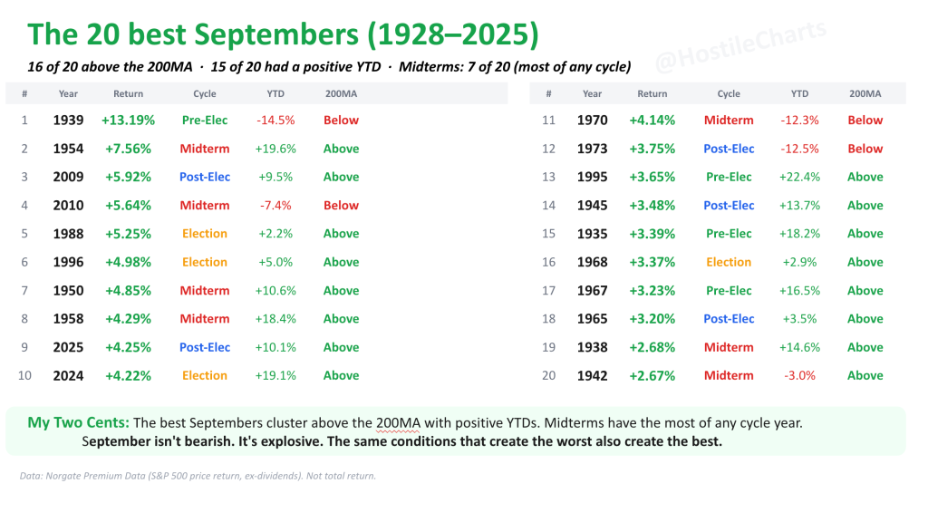
And in case you’re living under a rock, all 3 of those conditions are currently true in 2026.
"So the conditions for the best Septembers currently exist," Larry said. "September isn't bearish per se. It's just explosive. Those conditions create positive and negative environments."
JC backed it up with Ari Wald's work at Oppenheimer. Since 1950, starting September above the 200-day gets you an average gain of 0.2%—basically a coin flip. Starting below it gets you an average 3% loss.
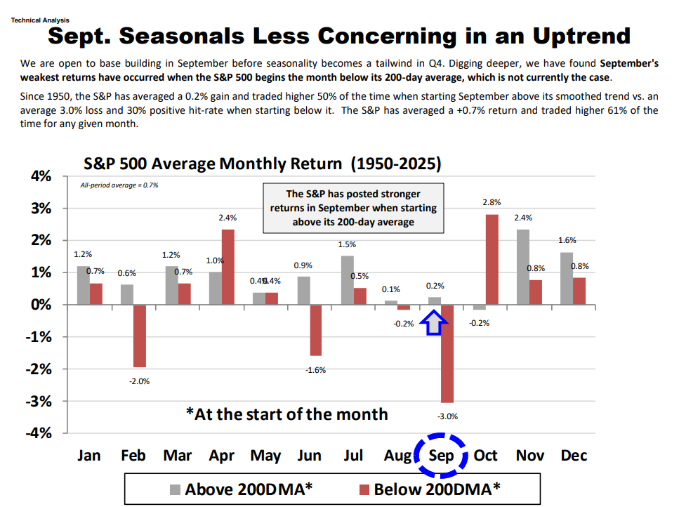
Larry’s playbook for the next three months is one line. "Leave your losers in August. Avoid vulnerability in September and then bottom fish in October."
We also got into the Robinhood blockchain launching meme coins, one of which went from zero to $500 million in days, and why NVDA looks great right now.
Alright, that’s all for me. I’m off to the Jersey Shore for the week. Hopefully the guys don’t get us cancelled. I’ll be watching…
Spencer
P.S. If you missed Kenny live yesterday, the replay is up. He walks through the setup he named after his nephew.
Questions and answers
#From the September 4, 2026 Daily Rundown.
Why doesn't September's average return tell the whole story?
The average combines markets entering the month in different conditions. Larry Thompson examined strong historical Septembers alongside the 200-day moving average, year-to-date returns and election-cycle context. Spencer also cites research separating months that began above or below the long-term average.
What can the study of the best Septembers tell a reader?
It identifies conditions shared by those selected strong months, such as an established uptrend. It does not turn September into an automatic bullish or bearish position. Thompson's practical emphasis was on avoiding vulnerable stocks and keeping the current trend in view.
Originally published by Spencer Israel.