

Grant Hawkridge’s Test for a Breakdown in the S&P 500
After a selloff in chip stocks, Hawkridge still saw a trading range. On November 9, he showed which signals had weakened and what it would take for him to turn more bearish.
IDEAS / People
After a selloff in chip stocks, Hawkridge still saw a trading range. On November 9, he showed which signals had weakened and what it would take for him to turn more bearish.

The Morning Show compared sector strength, gold's lost levels and the price evidence Brian Lund wanted before entering a trade.

A discussion of catastrophic AI risk turns on how the disclosure describes its consequences for the business.

JC Parets asks what happens to a bearish trade if the expected political result fails to arrive.

The October 30 Morning Show separates weakness in the biggest technology stocks from improving participation elsewhere in the market.

Ahead of Amazon's October 29 report, Jeff Macke and The Morning Show team weigh AI monetization against a market demanding more spending discipline.

JC Parets and Spencer Israel discuss a gap between the index level and the mood around it.

The Morning Show examines the tension between rapid AI growth and financial risk, while software charts reveal a less uniform story.

His criticism of the inflation-hedge argument still leaves room for owning gold at a particular time.

He remembers adults buying storm insurance after the damage had already happened.

The Bison Insights author explains why a bullish oil outlook does not lead him to buy every energy company or ETF.

The Morning Show debates market breadth and portfolio pain, then Denise Shull explains how emotion can influence the next trade.

The October 20 Morning Show examined Netflix's transition, weakness in AI shares and the need for other sectors to take a leadership role.

Spencer Israel, Steve Strazza and JC Parets weigh weaker guidance, competition for attention and the price levels shaping their different views.

JC Parets and Steve Strazza compare company merchandise with a more expensive metaverse purchase.

The October 19 Morning Show weighed improving participation against weaker technology leadership, a new credit signal and the need for price confirmation.

Jason Perz cites a dramatic gain, prompting JC Parets to ask for the number again.

On October 15, the panel questioned technology's leadership while Jeff Macke and Sean McLaughlin looked for retailers with improving demand and stronger charts.

JC Parets, Steve Strazza and Spencer Israel disagree about what weak homebuilders mean for stocks. Energy leadership offers a second test of the same question: how much can an index conceal?

A strong bank report is only the beginning. Jack Tacher joins the Morning Show to examine whether financials, homebuilders and transports can support the next leg of the market.

The Morning Show separates the case for energy shares from a dramatic crude-oil forecast, then tests whether improving participation can extend the bull market.

The Morning Show weighs a possible bond reversal against the larger trend, while John Salama and JC Parets examine whether attractive charts also offer attractive option prices.

Todd Sohn explains why several funds can leave a portfolio making the same technology bet. The Morning Show also tests the bond-bottom narrative and the search for the next group of market leaders.
Maybe this is a sign to diversify.

The Morning Show separates trouble in the weakest bonds from broader market stress, while Steve Strazza explains why a rising dollar and falling Treasuries still make him cautious.
It's really only a few bad apples.

JC Parets wants the Brazilian rally to hold its ground. Stephen Weitzel applies a similar confirmation test to bonds and industrial stocks, where the next move could matter more than the first bounce.

Brian Lund joins the Morning Show to distinguish a useful specialization from an attachment to broken trades. The hosts also debate what a long rising-rate cycle would actually mean for stocks.
The veteran technician urges investors to examine longer histories and negative divergences. Her Morning Show visit places the debate over narrow leadership inside a much larger market context.

The September 24 Morning Show weighed technology leadership against bond-market stress. Mish Schneider supplied a sector map for distinguishing a pause from a deeper break.

JC Parets and Steve Strazza debate what technology strength can tell us about the broader market, while James Bartelloni looks for reversals in some of its least-loved charts.
Just because something is unusual, that doesn't make it actionable.

A technology breakout brought optimism to the September 22 Morning Show. Webster explained the checklist behind his response, and the price action that would change his mind.

Bitcoin's jump revived risk appetite on September 21. Roundhill CEO Dave Mazza explained how different ETFs express different parts of the technology story.

The veteran technician distinguished a worrying divergence from a confirmed change in the primary trend, using the Dow's July low as his reference.

Louis Sykes saw a possible crypto recovery. Ralph Acampora was watching a specific Dow support level. Their different horizons gave the September 18 Morning Show its central tension.
What a 57-year veteran is watching right now.

A rebound challenged the initial rate-hike selloff, Jeff Macke looked for consumer businesses that could withstand fuel pressure, and Sean McLaughlin mapped the awkward middle of a Nike options trade.

Before the Fed decision, Stockton distinguished a possible countertrend rally from a durable reversal, while Jason Perz explained what the long end of the curve could reveal afterward.

Bank weakness and sector rotation complicated the tape, but Antonelli argued that improving profit expectations deserved more attention than a familiar catalogue of market fears.

JC Parets saw stocks returning to buying levels. Grant Hawkridge saw reason to be selective and potentially fade a rally. Their disagreement turned on which evidence deserved the most weight.

A stronger morning and renewed speculative interest did not erase the need for a better entry. Adams explained why buying pullbacks had worked better for him than chasing breakouts.

JC Parets and Steve Strazza considered the contrarian case for bonds, while Sam Gatlin argued that the primary trend remained hostile. Their disagreement came down to time horizon and confirmation.

The Morning Show separated owning Nvidia from deciding to buy it again, then put trading rules, market breadth and selective participation through the same test.

Louie Sykes separated a possible near-term crypto pullback from his year-end outlook. Larry Thompson made a parallel case for judging seasonality inside the market’s prevailing trend.
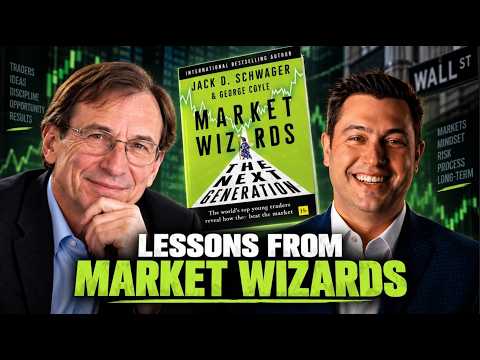
The Market Wizards author and George Coyle discussed unusual trading methods, familiar risk failures and why spotting a bubble does not tell you when to sell it.
That’s what the average says. But it lies.

Warrior Met’s strength led to a closer look at steelmaking coal, power-generation coal and the seasonal forces that could make a good industry thesis a difficult short-term entry.

Jason Perz connected energy strength with his bond-market framework, while Phil Pearlman raised the harder portfolio question: how to add after a position has already worked.
Energy just closed at a record high. You probably don’t own enough.

The Bloomberg ETF analyst distinguished easier ownership from the harder questions of valuation, portfolio fit and who benefits from tokenization. The Morning Show also examined the difference between a weak session and a strong monthly trend.

JC builds a list every year. Here's what's on it.


And sometimes, it’s even better to be both.

It was on full display this morning.

Twenty minutes of watching JC work, and I get why he said it.

So, what should we do about it? JC’s got an idea.

It really depends on who you’re talking about.

There’s nothing like a little public shaming to drive home a point.

July was a horrible month for the semi trade. But that didn’t stop people from buying.


Six of eight signals were positive on July 13, 2026. Improving participation supported the bullish case, while an untriggered breadth thrust kept the checklist from an all-clear.

The February 19 Morning Show separated a quiet index from the stocks moving underneath it. JC Parets and Steve Strazza debated tech's progress, while Sean McLaughlin explained where he was finding breakouts.

On the February 18 Morning Show, JC Parets used transport breakouts to assess the broader market. The panel also examined financial support, speculative risk appetite and Mary Thwaites's tentative software entries.

Steve Strazza's trade review exposed a mistake: using improving breadth to justify laggards. The February 17 Morning Show also examined AI disruption, financial-sector differences and earnings reactions.

The February 13 Morning Show examined Coinbase's recovery near prior lows, its changing revenue mix and a broader market where improving breadth coexisted with defensive leadership.

The February 12 Morning Show found leadership outside the largest tech stocks, then used Cisco and Generac to show why an earnings headline was only part of a trade.

JC Parets and Spencer Israel debated the dollar’s decline on February 11, 2026, using emerging-market currencies, gold and shifting stock leadership to test competing explanations.

On February 10, JC Parets saw expanding participation as evidence for the bull market. He still wanted more proof before joining Steve Strazza's aggressive software call.

On February 9, the Morning Show looked past the Dow milestone to broader participation, healthcare's unfinished breakout and the different signals inside agribusiness.

The February 6, 2026 Morning Show weighed aggressive selling in software and crypto against strong market breadth. Stephen Suttmeier joined the debate over what would confirm a broader problem.

The February 4, 2026 Morning Show paired a debate over value and growth with Mary Thwaites’s energy and bank setups, each tied to a level that could invalidate it.

Todd Sohn joined the February 3 Morning Show to discuss money returning to overseas markets, Japan's different sector mix and the risk of chasing an already crowded move.

The February 2 Morning Show separated a damaged metals trade from a possible longer commodity cycle, with energy stocks and the CRB index offering different evidence.

The January 30 Morning Show compared energy's breakout, an extended hardware trade and new international setups as the hosts looked beyond the sharp metals reversal.

The January 29 Morning Show examined the gap between a favorable earnings story and a favorable trade, with Jeff Macke on Starbucks and Sean McLaughlin on a bearish silver position that made money while he was wrong.

In the January 28 reaction stream, JC Parets and Jason Perz followed long-term yields, a dollar rebound and energy leadership to test what the policy announcement meant for their equity views.

On January 28, the Morning Show separated sector exposure from market breadth, then applied the same attention to price behavior to bonds and earnings.

On January 27, 2026, the hosts weighed crowded precious-metals trades, a possible technology breakout and the discipline of accepting a missed opportunity.

The January 26, 2026 Morning Show paired a constructive equity outlook with questions about Bitcoin, Japanese bonds and an increasingly stretched precious-metals trade.

On January 23, 2026, JC Parets, Louis Sykes and Larry Thompson examined the gap between sluggish headline indexes and stronger stocks underneath them.

Spencer Israel and JC Parets returned from Miami on January 22, 2026, with a wider opportunity set and a specific credit-market signal they wanted to keep watching.

On January 16, 2026, Steve Strazza challenged late entries in precious metals, JC Parets allowed for more upside with sharp drawdowns, and Kenny Glick separated physical holdings from short-term hedges.

The January 15, 2026 Morning Show examined opportunities that required more than buying the strongest chart, with Steve Strazza, Sean McLaughlin and Jeff Macke explaining their different approaches.

On January 14, 2026, JC Parets saw changes in market leadership worth watching. Steve Strazza thought several of the same charts still supported a bullish view.

The January 13, 2026 Morning Show paired an intermarket debate with Salama’s new trend-following experiment and Phil Pearlman’s argument for a simpler investment process.

The January 12, 2026 Morning Show examined what headline earnings leave out, how AI spending changes the cash-flow question and why bank-stock reactions would matter that week.
The January 9, 2026 Morning Show connected a possible crypto bounce with a wider discussion of market leadership, trade selection and the discomfort of holding a winner.

Midcaps and transports were confirming the advance. Lund's response was to give strong trends more room, while the hosts debated whether lagging software could catch up.

Todd Sohn saw a case for neglected sectors, but his larger question was how much of the same growth exposure investors held through different funds.

On January 2, 2026, the Morning Show examined international strength, debated what monthly charts could reveal and narrowed the discussion to specific China and Latin America setups.

The December 31 episode moved from a debate about market breadth to Jeff Macke’s retail observations and Steve Strazza’s distinction between long-term holdings and shorter-term technology trades.

Mike Zaccardi joined the December 30, 2025 Morning Show to examine the evidence behind annual forecasts, while Phil Pearlman asked traders to identify the methods they could return to consistently.

On December 29, 2025, Steve Strazza questioned fresh exposure to extended metals while Sam Gatlin defended the larger trend and pointed to different opportunities in mining stocks.

The December 26, 2025 Morning Show weighed strong index trends against year-end reversals, with Kenny Glick explaining why a fast silver trade required a different approach from a longer-term stock idea.

The hosts favored a year-end advance, but Sean McLaughlin and Mary Thwaites kept their attention on positions, exits and the time required for the next setup.

The December 23 Morning Show paired improving financial-sector breadth with a trading mistake and a deliberately narrow plan for fixing recurring habits.

Matt Cerminaro brought a bearish AI-stock basket and bullish breadth evidence. JC Parets questioned the selection, then compared it with broader measures of risk appetite.

On December 12, 2025, JC Parets tested his bullish outlook against the conditions that could overturn it. Louis Sykes discussed a possible crypto recovery, while Larry Thompson separated improving breadth from a confirmed small-cap leadership change.

The December 11, 2025 Morning Show connected new value-stock highs with Reitmeister's case for cheaper companies, while debating what Oracle's slide meant.

In the December 10, 2025 live reaction, small caps, regional banks and energy mattered more to the panel than guessing the next line from the Fed.

In the December 10, 2025 Morning Show, Thwaites reviewed GE Vernova, SiTime and BridgeBio while waiting for the broader market to resolve its consolidation.

On December 8, 2025, Jason Perz, JC Parets and Steve Strazza compared energy with stronger metals markets and debated the cost of waiting for oil stocks to move.

On December 4, 2025, Sean McLaughlin and JC Parets discussed wide spreads, patient orders and the compromises involved in finding a liquid way to express a trade.

In the December 3, 2025 Morning Show, Lund and JC Parets discussed cash, trading pressure and a watchlist that separated improving charts from damaged stocks.

On December 2, 2025, JC Parets emphasized financial stocks at new highs while Spencer Israel focused on the sector's weaker year-to-date return.

On December 1, 2025, Sam Gatlin and JC Parets examined silver's breakout, its strength against gold and stocks, and regional banks that had held up during November's pullback.

On November 25, 2025, the Piper Sandler technician challenged the case for an immediate year-end rally, identified the recovery that could change his mind and debated biotechnology and gold with JC Parets.

The November 24, 2025 Morning Show examined the correction beneath the indexes, debated healthcare's leadership and watched for confirmation in banks, energy and China.

On November 21, 2025, the hosts debated early signs of resilience while Kenny Glick explained the previous day's short setup and Louis Sykes assessed crypto's decline.

Before Nvidia reported on November 19, 2025, Blake Millard explained his longer-term allocation view while the Morning Show weighed weakening charts against resilient earnings.

On November 18, 2025, Aaron Jackson joined a Morning Show debate about selective longs, weakening leaders and the discipline needed during a correction.

On November 17, 2025, Sohn discussed international equities, neglected sectors and the opportunity cost of waiting for energy to break out.

On November 14, 2025, Strazza explained why he had reduced leverage and speculative exposure. Parets emphasized global participation, while Louis Sykes wanted Bitcoin to recover before buying.

Larry Thompson and JC Parets debated a sideways market on November 14, 2025, with software, homebuilders and small caps supplying the next tests.

On the November 13, 2025 Morning Show, Macke prepared for holiday-season retail reports, compared store observations with stock charts and joined Sean McLaughlin to discuss what a shopping trip could reveal.

On the November 12, 2025 Morning Show, Salama looked beyond the largest technology stocks for evidence of participation. His broad optimism still included specific exits, short-term pullback risks and a losing oil trade.

Christians saw unusually thin participation within the S&P 500's advance. Parets saw strength across a wider set of markets. Their disagreement exposed the importance of the comparison.
Lundgren saw speculative excess, but his November 7 discussion separated that diagnosis from the evidence needed to buy, sell or short. Louis Sykes wanted a clearer turn in crypto prices.

The LPL strategist saw an intact uptrend on November 6, 2025, while healthcare, the dollar and commodities approached important tests. Other traders on the show were feeling more strain.

JC Parets saw constructive rotation into transportation stocks. Brian Lund agreed the market could avoid a crash while choosing to trade less and stay within his own style.
The November 4 Morning Show debated weakening speculative stocks without losing sight of new leadership, then examined the position sizes behind traders' anxiety.

On the November 3, 2025 Morning Show, Stockton weighed VIX support, momentum signals and global participation. Sam Gatlin later examined the transport stocks that could help confirm the broader advance.

On October 30, 2025, Jeff Macke compared consumer businesses, Kenny Glick followed the earnings reactions and Sean McLaughlin challenged JC Parets on the next stage of technology leadership.

On the October 30, 2025 Open Bar, the two technicians debated breadth, tested bullish software setups and identified the support levels they wanted risk-sensitive groups to hold.

The October 28 Morning Show debated whether a long energy base demanded action now, how options changed the timing question and when a portfolio had already earned enough risk.

Trainer demonstrated a New Constructs research agent and argued that domain expertise mattered more than the size of a computing budget. The hosts pressed him on what its rankings actually meant.

Steve Strazza and JC Parets found a tightening continuation pattern in Madrigal while debating how much confirmation an energy rotation still required.

Investopedia's search traffic and reader surveys showed caution alongside continued conviction in large technology stocks. Silver explained why the question asked changed the sentiment picture.

Dave Mazza explained the relaunched MEME strategy on October 21, 2025, while Phil Pearlman examined a market in which fear was moving faster than stock prices.

The October 17, 2025 Morning Show split over the depth of equity-market weakness, while Louis Sykes described a crypto market still recovering from forced selling.

On the October 16, 2025 Morning Show, Macke connected Walmart’s breakout with a possible improvement in online shopping, while JC Parets and Steve Strazza revisited Hims.

Thwaites was taking profits before a trip while watching weekly biotech setups and strength in Bitcoin miners. A bullish outlook did not require her to keep every position at full size.

JC Parets and Steve Strazza disagreed about market history but agreed on the immediate test: price had to confirm the rebound, with small caps and housing under scrutiny.

Perz and JC Parets examined gold against several currencies, while Steve Strazza challenged the leap from a strong gold trend to predictions about the end of the dollar system.

On October 8, 2025, Hirsch and JC Parets examined why strength during a seasonally weak period supported their year-end outlook, while keeping the 2026 midterm cycle in view.

The October 7, 2025 Morning Show examined proposed triple-exposure products, uncertain tracking and the difference between spotting speculative behavior and calling a market top.

On October 3, 2025, Sykes argued that recovering altcoin charts could benefit from a Bitcoin breakout, while JC Parets explained why he had chosen IBIT calls for his own added exposure.
On October 2, 2025, Macke and Sean McLaughlin compared inventory, service and checkout friction after a shopping trip, while keeping store observations separate from financial proof.

The October 1, 2025 Morning Show paired a Russell 2000 confirmation debate with Brian Lund's repaired-chart setups and Mary Thwaites's biotech and quantum watchlist.

The September 30, 2025 Morning Show used Koyfin's data tools to connect technical reversals with fundamentals, while distinguishing available alerts from ideas still under discussion.

The September 29, 2025 Morning Show asked how small-cap and international leadership could change portfolio allocations. Jason Perz later separated established metals strength from energy signals still pending.

The September 25, 2025 Morning Show separated weakness in Coinbase and Strategy from stronger areas of the market, while Kenny Glick explained why an attractive day-trading stock was not necessarily a long-term holding.

The September 23, 2025 Morning Show examined the evidence behind Parets' bullish position and a live disagreement over how far small-cap leadership had progressed.

The September 22, 2025 Morning Show connected nuclear-stock strength with a practical question: how much time should the trade give a multiyear chart pattern?

The September 19, 2025 Morning Show paired a Russell 2000 breakout with Louis Sykes’s case for crypto participation beyond Bitcoin and Ethereum.

On September 18, 2025, a nearly expired Tesla-linked position prompted a discussion of time remaining, stretched prices and where an options trader still had an edge.

Sykes compared miners' planned power allocations with stock performance and argued that the companies moving toward AI computing were receiving a different valuation from those focused on Bitcoin.

McLaughlin and Steve Strazza discussed the discomfort of holding profitable options, the cost of giving gains back and the growing need to protect wealth after a strong run.

Tacher explained how he prepared outside market hours, accepted being wrong and used emerging themes without abandoning position limits or his earnings rule.

On September 5, 2025, JC Parets, Steve Strazza and Larry Thompson saw expanding equity strength, while Louis Sykes questioned the premium investors paid for corporate Bitcoin exposure.

The September 3, 2025 Morning Show compared unfinished small-cap and transport bases with Brian Lund’s trading plan and Mary’s gold, silver and energy setups.

On September 2, 2025, Sohn joined JC Parets and Steve Strazza to discuss neglected small caps, international leadership and the difficulty of separating crypto adoption from speculation.

Weitzel challenged the habit of judging international stocks by years of disappointment, while asking for more confirmation before a larger small-cap allocation.

His October strangle sought a larger move than options were pricing, while JC Parets questioned whether seven weeks gave the trade enough time.

Before Nvidia’s August 27 report, Steve Strazza focused on the durability of earnings growth. Kenny Glick watched for actual sellers, while Riley Rosebee examined Tesla’s next operating hurdle.

The August 26 Morning Show interview covered volatility-adjusted momentum, a 60% breadth threshold and the difference between a strong trend and a good entry.

The August 25 Morning Show paired an aggressive China trade with a more selective view of crowded winners. Small-cap strength and international participation helped frame the rotation.

On August 22, Sykes favored developing altcoin bases, while the hosts debated Solana's weakness and whether new Bitcoin trading vehicles were eroding Strategy's premium.

The August 21 Morning Show explored event contracts, sports and brokerage distribution, then challenged the idea that useful market information settled the wider question about gambling.

Before Jackson Hole in August 2025, Brodie compared currency markets with rate expectations, waited for a gold breakout and challenged the Morning Show's bullish reading of equity rotation.

The August 18, 2025 Morning Show weighed chip-stock breadth against market-cap concentration, then turned to retail earnings and Jason Perz’s preference for precious-metals miners.

On August 15, 2025, the Morning Show paired a long-dated UNH position with Kenny Glick’s intraday fade and a debate over the next stage of crypto rotation.

The August 14, 2025 Morning Show connected D-Wave’s low implied volatility with an unfinished chart setup, while Jason Krutzky explained how he followed competing memecoin launchpads.
The August 13, 2025 Morning Show paired a debate over crypto leadership with Thwaites’ biotech watchlist and Riley Rosebee’s argument for autonomous transport.

On August 12, 2025, Mike Akins examined thematic overlap, options-based income and the changing market for active ETFs.

On August 11, 2025, Paul LaMonica revisited the Chinese technology trade after the spring rebound and explained why the valuation gap persisted.

On August 8, 2025, Louis Sykes favored a Solana catch-up trade. JC Parets wanted its relative weakness to improve before embracing that argument.

On August 7, 2025, Wujastyk discussed China, Micron and why a bullish market view did not require holding every options position for weeks.

An Elliott wave count and a long-term retracement drew Parets toward UnitedHealth in August 2025. The conversation quickly turned to how much time a recovery might need and which instrument could accommodate it.

Sohn's August 5 ETF discussion separated temporary fund activity from lasting demand, flagged enthusiasm in crypto and power infrastructure, and reconsidered what cash balances said about small caps.

After copper's sharp reversal, Perz separated the implications for industrial commodities, bonds and gold. He wanted confirmation before changing his broader market view.

On August 1, 2025, Steve Strazza and Sean McLaughlin discussed the gap between staying with established trends and pressing new trades after the market's behavior changed.

On July 31, 2025, Wald distinguished participation from leadership and explained why lagging small caps did not automatically make large-cap growth a sell.

On July 30, 2025, Greenberg and JC Parets discussed false authority, personal bias and the work required to understand an unfamiliar business.

On the July 29, 2025 Morning Show, Pearlman addressed the urge to take profits too quickly, while Parets and Strazza connected trading plans with their own experiences of risk and failure.

On the July 28, 2025 Morning Show, Franzen compared MSTR with Bitcoin, defended software’s relative strength and separated his bullish outlook from the timing of a Fed cut.

On the July 21, 2025 Morning Show, McMillan explained his trend-following approach, the stocks helping ADPV and why a rising small-cap index still needed to demonstrate relative strength.

The July 18, 2025 Morning Show paired a broadening speculative rally with Macke’s discussion of Netflix earnings, recurring household demand and the value of live-content rights.

On July 17, 2025, Shannon explained the Nasdaq’s trend, an unfinished AppLovin setup and the trade-offs behind his five-minute rule for gap-down openings.

The July 16, 2025 interview traced Generated Assets to a specific customer request and distinguished informational portfolios from implementation features still being developed.

Their July 16, 2025 crypto discussion paired a bullish market-cap forecast with a more specific question: which assets were beginning to outperform Bitcoin?

The July 15, 2025 Morning Show paired Lee's bullish infrastructure thesis with Pearlman's argument for deciding risk rules while markets were strong.
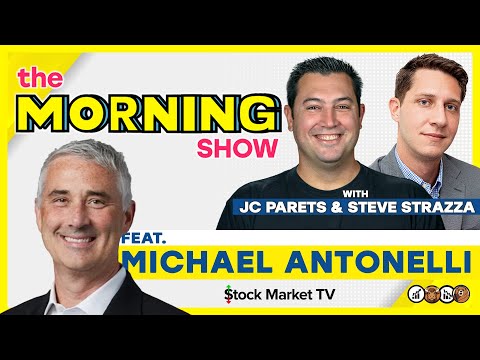
In the July 14, 2025 Morning Show, Antonelli and JC Parets explained why the relationship between discretionary stocks and staples mattered more to them than another alarming headline.

On July 11, 2025, Thompson connected the rotation in crypto and stocks, then used NuScale Power to explain how a pullback could create a clearer decision.

On July 10, 2025, Weiss explained how the April retracement, a weekly gap and a long-term trend line shaped his reading of record highs.

On the July 9 Morning Show, Martin connected commodity ideas to order placement and position sizing. Mary Thwaites brought the same questions to her equity watchlist.

Sohn used QUAL, ARK and Strategas’s thematic fund to explain why a different label could conceal familiar holdings, then looked abroad for a different portfolio mix.

The July 2, 2025 Morning Show connected improving housing charts with strength in semiconductors. Brian Lund, Steve Strazza and Mary Thwaites weighed confirmation, entry prices and holding periods.
JC Parets and Steve Strazza agreed that the market's trend was up on July 1, 2025. Their debate over the Dow showed why identifying a trend and confirming a breakout required different charts.
On June 30, 2025, Adams favored the market's leaders while watching for failed breakouts. Jason Perz saw a different form of confirmation in copper, silver and the gold miners.

Sykes expected speculative activity to spread through crypto on June 27, 2025. Rising Bitcoin dominance had yet to confirm that view, even as he found encouragement in funding rates and crypto equities.

Riley Rosebee saw a major opportunity in autonomy on June 26, 2025. The Morning Show hosts pressed him on why Tesla should get the capital when Nvidia and Uber were showing stronger price action.

The June 25, 2025 Morning Show celebrated a completed recovery in the Nasdaq 100. Parets and Steve Strazza also found support for their bullish view in financials, industrials and selected Chinese stocks.

On the June 24, 2025 Morning Show, Steve Strazza wanted to see whether homebuilders could rally through disappointing news. JC Parets preferred the builders themselves, while Uber offered another defined setup.
The June 23, 2025 Morning Show examined what sentiment indicators actually measure, why short-interest comparisons can change over time and how homebuilders might resolve their standoff.
On the June 18, 2025 Morning Show, Justin Spittler compared Antero, uranium and Nextracker with weaker sector charts. His preference for established strength also shaped the semiconductor names he brought to the discussion.

In his June 17, 2025 Morning Show visit, Oliver Renick discussed pairing Bitcoin with a short in Strategy, an unresolved ETF concept and the trading losses that changed his own appetite for risk.

On June 16, 2025, Kunal Desai explained how preparation, time of day and coaching shaped his short-term trading. In the strong market he saw then, the next challenge was giving profitable positions enough room.

On June 13, 2025, Steve Strazza and JC Parets discussed the energy positions they already owned, the commodity signals behind them and a healthcare rebound that complicated a possible Eli Lilly short.

On June 12, 2025, Rath examined small caps, emerging markets and Ethereum for signs of wider risk appetite. He welcomed participation without making every lagging group a prerequisite for further gains.

On June 11, 2025, Settle favored large technology stocks while tempering his S&P 500 outlook with valuation. Later, Mary Thwaites examined semiconductor charts through a longer trading horizon.

On June 9, 2025, Place and Sean McLaughlin examined why attractive option premiums could still produce difficult trades, and why direction came first in Place's preferred strategy.

On June 6, 2025, Boneparth explained why steady income mattered most to his younger clients, then debated international diversification, commodities and Bitcoin with JC Parets.
On the June 5, 2025 Morning Show, Caruso explained how relative strength, short-term breadth and staggered entries shaped his participation in the recovery.

In their June 4, 2025 discussion, Herb Greenberg questioned what Oklo's announcements meant for the business while JC Parets set out the price that would change his trading view.

The June 4, 2025 Morning Show paired Parets' conviction in the recovery with Strazza's concern about speculative stocks fading after strong news.

The Gold Newsletter editor explained why mining shares had lagged bullion and why a strong cycle could still punish investors who never took money out.

On May 30, 2025, Louis Sykes saw fading crypto momentum and began comparing corporate Bitcoin holdings, business values and stock-price premiums.

On May 29, 2025, Elfenbein explained what kept HEICO, Intuit and other businesses on his list, and why he kept evaluating management even while leaving his selections alone.

On May 28, 2025, Denholm separated the opportunity in the stock-market recovery from his longer-term concern that higher yields would compete for investment money.

On May 27, 2025, Larry Pesavento expected a sharp market decline. His conversation with JC Parets separated that broad forecast from the price at which he would abandon his short trade.

On May 23, 2025, Matt Warder preferred company-specific opportunities to a blanket commodity forecast, discussing copper miners, IperionX's production ramp and different coal exposures.

On May 22, 2025, Scott Redler and Kenny Glick used the same failed-breakdown pattern to explain entries, exits and the limits of an intraday signal.

On May 20, 2025, Anne-Marie Baiynd saw room for the rebound to continue while watching volatility, energy costs and the pressure on businesses built for cheaper money.

On May 19, 2025, Jason Perz and JC Parets discussed gold’s pullback, Deere’s breakout and the tendency to overlook stocks outside the United States.

During the May 12, 2025 rally, SpotGamma’s founder distinguished the headline volatility index from dealer hedging, individual option prices and the conditions around S&P 500 resistance.

The May 9, 2025 Morning Show introduced a research basket of seven potential long-term leaders, then examined the individual charts and business assumptions behind the selection.

On May 7, 2025, Lund saw improving charts but remained wary of headline-driven reversals. His response was to change the type of position he was taking and watch how stocks absorbed bad news.

In their May 7, 2025 discussion, Herb Greenberg questioned the business assumptions behind MP Materials and Hims & Hers. JC Parets explained what prices would have to do before those concerns became short trades.

On May 6, 2025, Sohn described cooler equity demand, strong interest in Treasury bills and gold, and selective international strength. He viewed that caution as potentially constructive after the market worked through its volatility.

On May 5, 2025, Perz and Steve Strazza discussed the recovery from April’s selloff, overseas leadership and the breadth improvement they still wanted to see.

On May 2, 2025, Thompson was already long but wanted more evidence of an intermediate-term recovery. JC Parets questioned whether waiting could miss a continuing rebound.

Their May 2, 2025 discussion connected energy, robotics and transportation with stock-market leadership, then examined Tesla, Archer and the breakouts still needed.

The April 30, 2025 Morning Show paired Jeff Weiss’s long-term chart work with Mary Thwaites’s small entries in homebuilders and software ahead of major earnings reports.

On April 29, 2025, Wald favored financial-sector momentum but wanted more evidence from small caps before treating the market’s rebound as a broad recovery.

The April 25, 2025 Crypto Friday discussion paired improving Bitcoin price action with a disagreement over how quickly the next major target could arrive.

On the April 24, 2025 Morning Show, Strazza explained the Young Aristocrats screen and the price evidence he still wanted before trusting the market’s rebound.

The April 23, 2025 Morning Show compared Bitcoin’s recovery with an unresolved S&P 500 range, using anchored VWAP to distinguish improving conditions from confirmation.

On the April 22, 2025 Morning Show, John Roque distinguished an oversold bounce from a durable recovery and explained why banks, moving averages and each asset’s own chart mattered to his process.

The April 21, 2025 Morning Show examined how a large stock gain could receive a negative reaction score, while Kenny Glick watched earnings gaps inside QQQ’s unsettled range.

On the April 17, 2025 Morning Show, LongFi’s Josh Heller explained why a DMV queue, a dentist’s waiting room and a busy restaurant could matter to a decentralized wireless network.

The April 16, 2025 Morning Show examined a possible higher low, an unfinished intraday base and the difference between semiconductors losing leadership and continuing to break down.

On April 15, 2025, the SentimenTrader analyst separated improving market internals from an index bottom and explained why a sharp rally could still lead into months of repair.

On April 14, 2025, “Chart Kid” Matt examined the broad participation in the prior week’s rally, the risk of an early signal and why stock prices can turn before earnings do.
On April 11, 2025, JC Parets, Steve Strazza and Louis Sykes examined former highs, Chinese equities and the difference between a momentum divergence and an actual turn.

On April 2, 2025, Brian Lund explained why he was waiting for better swing-trading conditions, how he narrowed his watch list and why a strong chart could still fall outside his own rules.

On April 1, 2025, Todd Sohn used leveraged ETF assets and international fund flows to examine how much investor behavior had changed after a difficult quarter for U.S. growth stocks.

On March 31, 2025, Herb Greenberg explained how he developed company research and tested his own doubts, while JC Parets examined where a bearish thesis could meet a price trigger.

On March 28, 2025, David Cox explained why persistent relative strength, portfolio volatility and the effort of holding a position all mattered to his stock selection.

On March 27, 2025, the Morning Show separated attractive market ideas from practical trading vehicles, while Sean McLaughlin described a wide QQQ iron condor for a choppy market.

On March 25, 2025, Meb Faber explained why expensive markets could keep rising, what attracted him to overseas stocks and how partial positions could ease all-or-nothing decisions.

On March 24, 2025, Greg Harmon examined the SPY and QQQ rebounds, international rotation and the inflation scenario that could undermine his constructive market view.

On March 21, 2025, Louis Sykes and the Morning Show hosts examined Solana support, Ethereum’s relative prospects and the price conditions behind their cautious crypto outlook.

On March 20, 2025, the creator of Relative Rotation Graphs explained the difference between a slowing relative uptrend and a broken one, then applied that distinction to sectors, bonds and international stocks.

In his March 20, 2025 conversation with JC Parets, Phil Pearlman focused on written risk decisions, smaller positions and the urge to win back losses during a volatile market.

In the March 19, 2025 State of the Markets discussion, Sean McLaughlin wanted stronger buying volume, JC Parets was acting on price levels, and Louis Sykes saw little reason to rush Bitcoin’s middle range.

On March 19, 2025, Scott Brown challenged a long-term technology chart by distinguishing the ETF from the sector index. He and JC Parets still agreed that the nearer-term trend needed repair.

On March 18, 2025, Frances Horodelski discussed Canadian resources, insider buying and U.S. healthcare with JC Parets. Her interest in Freeport was separate from the gold stocks she already owned.

On March 17, 2025, Jason Leavitt explained his SOXL purchase, the breadth divergence behind it and the price condition that would tell him the trade was wrong.

On March 14, 2025, Riley Rosebee discussed Archer, Joby and the software behind future air taxis. He was enthusiastic about the technology and cautious about naming the companies that would ultimately lead it.

On March 13, 2025, Chris Verrone thought sentiment was approaching conditions for a tradable rebound. He favored financials’ relative position, questioned technology’s leadership and remained bullish on Chinese equities despite repeated trading setbacks.

On March 12, 2025, Andrew O’Connell explained his recent purchases, his move from Alibaba to Futu and the market response he needed to see after that morning’s inflation report.

On March 11, 2025, Mike Hurley revisited a December warning in new stock lows. Its size had been easy to dismiss; its persistence, the market’s age and subsequent damage made him more cautious.

On March 10, 2025, Todd Sohn saw a rolling correction in U.S. stocks. European financials and recovering medical-equipment stocks gave him reasons to distinguish that weakness from a broader credit crisis.

On March 7, 2025, Steve Strazza and JC Parets discussed a sharp improvement in overseas relative strength. They still wanted U.S. indexes to prove they could hold support, while Alfonso DePablos identified healthcare leadership.

On March 6, 2025, Tommy Lackey saw a promising base in Chinese internet stocks while resisting the idea that weakness in U.S. equities had already ended their larger uptrend.

On March 5, 2025, Brian Lund was largely flat in his short-term trading while building a relative-strength watchlist. Mary Thwaites showed how she was already applying a similar search within healthcare.

JC Parets saw strength outside the struggling growth leaders. Steve Strazza worried that the decline was spreading, with semiconductors, homebuilders and consumer risk appetite giving him reasons for caution.

On March 3, 2025, Zabelin considered two competing effects of tariffs, the uncertainty facing the Fed and why enthusiasm for quantum computing still required attention to the investment vehicle.

On February 28, 2025, Detrick saw a correction within a bull market. His case depended on credit, financial stocks and broader participation, while his portfolios already contained adjustments for a less forgiving market.

On February 26, 2025, Franzen explained why he had exited his Strategy shares, used a short-term hedge and become more interested in Treasuries, while retaining substantial Bitcoin exposure.

During the February 26, 2025 live reaction, Kenny Glick watched the intraday range and VWAP while JC Parets focused on whether semiconductors would hold their larger structure into the weekly and monthly close.

On February 25, 2025, Koos explained how a failed bond position fit his risk rules, why repeated entries were harder with client money and where his bullish market view still needed confirmation.
On February 24, 2025, JC Parets, Steve Strazza and Jason Perz examined overseas leadership while Kenny Glick watched for another leg lower in momentum stocks.

On the February 20, 2025 Morning Show, LongFi’s Josh Heller explained why his wireless business was focusing on crowded venues, indoor dead spots and cellular traffic over Wi-Fi.

The February 19, 2025 Morning Show examined real-time alerts, preliminary backtests and the stock-selection problem in turning Glick’s trading method into a repeatable system.

On the February 14, 2025 Morning Show, Glick described the previous day’s failed reversal attempts in The Trade Desk and the exit habits he used in fast-moving stocks.

On February 12, 2025, Shapiro explained why crowded positioning needed to support his contrarian instincts, and why an unwinding position did not guarantee a price reversal.

On February 11, 2025, Wald separated early breadth warnings from completed breakdowns, explaining why he preferred established leaders while remaining open to selected Chinese stocks.

On the February 10, 2025 Morning Show, Dillian explained his change of view, weighed skepticism against warning signs and identified Colombia and energy as areas of interest.

On February 7, 2025, Sykes explained how leveraged positions could deepen a crypto decline, why Bitcoin still held his attention and what he wanted to see before an altcoin recovery.

On February 6, 2025, Matt Warder explained why limited new supply mattered to his commodity outlook, with different timelines for precious metals, coal and power demand.

On February 3, 2025, Teucrium’s Sal Gilbertie discussed agricultural production costs, futures contract selection and why a popular commodity does not always support a lasting fund.

On January 31, 2025, Steve Strazza and JC Parets paired their contrarian interest in Chinese equities with improving charts, while finding that the options market did not always offer the exposure they wanted.

On January 27, 2025, James Bartelloni brought a more cautious view to the Morning Show. His long-term chart targets had been reached, but he still wanted confirmation before treating the decline as a larger reversal.

On January 24, 2025, JC Parets and Steve Strazza both liked the market’s direction. Their argument concerned the weakness that preceded the rebound and what investors should count as evidence of healthier participation.

On January 22, 2025, Green examined natural-gas export capacity, copper’s dependence on China and the extra risks that come with owning mining shares.

On January 21, 2025, the Morning Show hosts disagreed about bearish sentiment readings but found common ground in currency support and financial stocks holding their earnings gains.

In the January 20, 2025 special, JC Parets and Spencer Israel examined an existing bull market, while Louis Sykes separated crypto speculation from the policy developments he wanted to see.

On January 17, 2025, Steve Strazza explained his rotation into ALGO, HBAR and XRP. Louis Sykes challenged XRP’s appeal and described the limits of his own sentiment observations.

The January 14, 2025 Morning Show debate turned on the quality of sector rotation, conflicting breadth measures and the financial stocks that could change Woods’s view.

On January 13, 2025, Gordon distinguished different kinds of dollar strength and yield-curve changes while keeping a conditional longer-term S&P 500 target.

On January 8, 2025, Thwaites distinguished an existing Lam Research position from a pending Advanced Energy breakout and a possible addition to Tesla.

On January 7, 2025, Sohn examined heavy ETF inflows, a proposed 3% cap on S&P 500 holdings and the different exposures inside quantum and nuclear funds.

On January 6, 2025, Horner described why she had stepped back from swing trades, how earnings affected her timing and what she wanted to see in crude oil.

His January 3 review separated a good-looking trade from a meaningful portfolio gain and led him toward simpler positions with clearly defined risk.

On January 2, 2025, Hirsch remained bullish for the year but worried about weak seasonal performance, rising long-term yields and difficult first and third quarters.

On the December 31 Morning Show, Lund explained his move toward longer holding periods, while Kenny Glick described the discipline required to keep trading through holiday chop.

On December 30, Zaccardi explained why weather models, volatility and the reason for a dollar reversal mattered more than a simple bullish or bearish label.

On Christmas Eve 2024, Weiss reviewed a completed measured move, the next support test and why protecting capital mattered more than selling at an exact break-even price.

Weitzel’s December 23 review combined caution about narrowing U.S. leadership with an emerging-market holding, a Tesla risk level and a reported DocuSign trim.

On December 12, 2024, Hawkridge weighed a streak of declining stocks against subdued new lows, sector trends and renewed megacap leadership.

On December 11, 2024, Nauss explained how he combined systematic entry rules, historical testing and discretionary stock selection, including an unfinished breakout model.

On December 10, 2024, Sohn examined ARKW’s mix of crypto-related exposure, Tesla and software while weighing concentration, European opportunities and the risk of a market shakeout.

On December 9, 2024, Reitmeister argued that small and midcap valuations offered more room than mega caps, while explaining why earnings revisions and growth mattered more than a low P/E alone.

On December 5, 2024, Carroll explained how futures relationships, volatility-product prices and stock-market divergences informed his trading, and why a volatility spike was not an automatic short.
In the December 3, 2024 Morning Show, Tentarelli described moving some exposure into smaller companies, adding to Tesla and watching defensive sectors for a change in market character.

Amazon, software, Bitcoin, small caps and transports were joining the advance as December 2024 began. Parets and Steve Strazza saw broader participation, with consumer-sector ratios reinforcing their view.

Steve Strazza and JC Parets use Peloton, Block and a stalled natural-gas trade to explain the entries, partial exits and remaining risk in their Breakout Multiplier approach.

Ari Wald saw a bull market with room to continue, even as technology paused. His November 2024 analysis separated absolute participation from relative leadership and favored strength over attempted turnarounds.

Batnick liked Zoom’s recovery but faced an imminent earnings report. His discussion with Steve Strazza connected position size, price reaction and the distance to a meaningful stop.

A viewer asked how technical traders handle a biotech stock that moves sharply on clinical news. Steve Strazza’s answer began with accepting the limits of a stop and spreading exposure across a basket.

Energy shares were strengthening while crude oil struggled. Bill Baruch explained how refiners, natural-gas infrastructure and oilfield services created different exposures within the same sector.

Greenberg’s concerns about a company could lead an investor to avoid it. JC Parets explained why a trading decision still needed a price level, using Hims & Hers and GFL as examples.

A newly released holdings report can describe an old position. Strazza explains why the manager’s time horizon determines how much attention he gives it.

Parker connects smaller position sizes with consistent execution, and explains why he does not immediately use large open profits to increase the size of new trades.

Low-cost index funds have changed the price investors will pay for an active portfolio. Balchunas sees managers responding with lower fees or strategies that do more than resemble the benchmark.

Software was reaching new highs and gaining against the broader technology sector. Franzen argued that it belonged beside the other breakouts Parets was using to judge the bull market.

Moss wanted a price level he could manage risk against. After a sharp advance, that might come from a pullback or from time spent moving sideways while short-term averages caught up.

Sykes was looking beyond Bitcoin for opportunities, but his bullish view still depended on its breakout holding and strength extending through the wider crypto market.

Parets liked the price of long-dated China exposure. Steve Strazza connected that choice to a fresh trend reversal that could take time to develop.

Stockton saw the strength in the breakout, but also signs of short-term exhaustion. She wanted several more sessions of confirmation before chasing the move.

Lund used small starter positions to keep promising stocks on his radar. A fast rally left him wishing he owned more, without changing his plan to look for pullbacks.

Sohn saw a strong recent move inside a much less convincing longer-term trend. He wanted the dollar and Treasury yields to prove they could keep moving higher.

Thompson liked the financial stock’s large monthly breakout, but preferred an entry closer to support. Cboe and Nasdaq also fit his interest in businesses benefiting from market activity.

Sykes liked Bitcoin’s consolidation near its old highs, but his $100,000 projection depended on a breakout. He also explained why Bitcoin dominance could obscure strength in individual altcoins.

Jeff Macke liked Amazon’s quarter and reinvestment opportunities. JC Parets and Steve Strazza still wanted the stock to clear resistance before treating the earnings reaction as a breakout.

Clissold distinguished stocks rising in their own right from stocks outperforming the biggest winners. His breadth measures supported the bull market, while elevated earnings expectations remained a concern.

Varghese described gold as a portfolio hedge that could coexist with a bullish stock outlook. He also saw different sources of household demand in China and India.

Fewer than 60% of NYSE stocks above their 200-day averages meant more to Wald if the S&P 500 was making new highs. A temporary drop during a correction was a different signal.

With 73% of S&P 500 stocks above their 200-day averages, Antonelli saw broad participation. A consumer-sector ratio helped him judge whether investors were still accepting risk.

Bitcoin was approaching the top of its range, but much of crypto remained deeply below prior highs. Sykes wanted confirmation before treating the catch-up opportunity as underway.

Salama had moved past his reluctance to own China, but he waited for the initial surge to cool before buying FXI calls. His broader search started with leading ETFs.

The report, conference call and first full session could tell different stories. Strazza and Spencer Israel used Wells Fargo and Blackstone to examine the price action that followed.

Johnson’s review of more than 4,000 U.S. stocks pointed him toward small and mid caps. He remained bullish while watching transportation stocks and credit for signs of trouble.

Lee expected companies to keep spending on AI even if his election forecast proved wrong. His enthusiasm for Palantir came with a warning about the price investors were paying.

Investopedia’s editor described bullish newsletter readers buying more ETFs, while other visitors were searching for help with loans, debt and retirement-account withdrawals.

Fairlead’s analyst was watching a breakout near $68,000 and a weekly momentum signal. His neutral Bitcoin view differed from his willingness to buy a pullback in China.

Steve Strazza saw the bank’s positive response to a mixed quarter as a reason to study what prices do after earnings, alongside the reported numbers.

Hirsch had cash and sector buy lists ready. Before committing more money, he wanted fresh daily MACD buy signals from the Dow, S&P 500 and Nasdaq.
Newton remained constructive into the following spring and summer. Improving participation and renewed strength outside technology outweighed his concerns about the later stages of the cycle.

Koyfin’s co-founder demonstrated a search for uncovered stocks near their highs, then showed how shared screens and common comparison charts could support further research.

Sohn preferred a fund that considered the consistency of gains. Parets challenged that preference by changing the performance comparison’s starting point.
A failed move above the August highs kept Sykes cautious in the short term. He wanted Bitcoin to consolidate before another attempt at its six-month channel resistance.

Reitmeister used stock ratings to narrow his research, then looked for healthy businesses with earnings momentum and reasonable valuations. EMCOR’s backlog was one reason it stood out.

After a strong quarter, Lund sold positions that failed to follow through. He was willing to wait before committing that cash to another round of trades.

A three-month ranking helped Lackey spot changes before a full year of outperformance had passed. He then used the charts to decide whether a candidate deserved a position.

New highs helped Lindzon find candidates. Understanding the business helped him decide which stocks he could hold through the pullbacks that might follow.

Glick had bought PayPal calls, but ZIM still needed to clear a level that had repeatedly stopped its advances.

Ives expected spending on AI chips to support a wider expansion in software, data centers and services. Palantir illustrated the commercial opportunity he wanted to find next.

Nygaard treated position sizing and contingency plans as part of the strategy itself. An attractive chart was only one part of deciding whether to take a trade.

The MUSQ founder explained why his music portfolio included record labels, concert businesses and technology companies alongside streaming services.

The FRDM creator explained how country freedom scores, market liquidity and stock selection shaped a portfolio that could differ from her personal market views.

Uber was rebounding from its 200-day moving average, but Strazza was more concerned with the weaker rallies and increasingly frequent returns to support.
McDonald was interested in battered names such as Micron, Nike and SLB, and expected selling pressure to peak earlier than it had in past decades.

Zarling said financial stocks were climbing ADPV’s momentum rankings. He treated that rotation as evidence to follow while watching for confirmation in other sectors.

On September 10, 2024, Hill explained how he ranked momentum leaders, filtered market regimes and handled false signals while treating the selloff as a correction within a bull market.

On September 6, 2024, Sohn saw weakening risk appetite beneath intact index uptrends. He was watching equal-weight stocks, participation and semiconductor leadership while finding opportunities in healthcare and real estate.

On September 5, 2024, Wald was watching defensive leadership and an approaching Fed cut. He still saw room for a year-end rally, while JC Parets pressed him on the absence of expanding new lows.
After Netflix, Disney and a biotech ETF failed his shorter-term trades, Lund described the intraday conditions he wanted to see improve before buying again. Mary Thwaites was also reducing short-term exposure while keeping longer-term positions.

On August 30, 2024, Sykes saw a cleaner positioning backdrop after futures liquidations, but still wanted momentum to return. He also explained why an apparent Ethereum outflow needed a closer look.

On August 29, 2024, Brodie centered his macro outlook on the two-year Treasury yield. JC Parets pressed him on whether falling yields and a weaker dollar should help stocks; Brodie’s answer depended on the economic reason for the move.

On August 28, 2024, WisdomTree’s Jeremy Schwartz explained why buying foreign stocks also required a decision about currencies. His Japan discussion led into interest-rate carry, international quality screens and dividend growth.

During the August 28, 2024 broadcast, Sean McLaughlin entered his Nvidia trade before the close. After the report, Steve Strazza argued that the first price swings were only part of the market’s response.

On August 27, 2024, Perz saw opportunities in bonds and precious metals. He separated a potentially useful bond rally from his longer-term inflation view, and gold’s strength from a broad commodity boom.

The August 26, 2024 Morning Show paired JC Parets’s broad-market optimism with Andrew Adams’s more cautious long-term view. Adams still favored buying dips above a defined S&P 500 support zone and was watching the yen for renewed disruption.

Pearlman brought forward part of a planned ETF purchase during the early-August decline. He was early, buying on Friday before another sharp drop on Monday, and explained why that fit his investing horizon.

Cox saw a broader rally and a possible soft landing, but initial jobless claims remained central to her outlook. She also challenged the idea that sitting in cash removed investment risk.

Franzen’s bullish equity outlook rested on participation, momentum and improving credit conditions. Bitcoin’s weaker relative performance left him watching a specific support zone.

Weitzel viewed the August decline as a pullback within an uptrend. His preference was shifting toward smaller companies and equal weighting, while overseas bargains still needed relative-strength confirmation.

Baiynd expected wider swings rather than an immediate collapse. She explained why she was buying pullbacks in leaders, reducing exposure into resistance and waiting for another entry.

The CMT Association’s new executive director discussed curriculum changes, opportunities for younger analysts and why technical investors should understand fundamental research too.

Spittler saw warning signs in market leadership without declaring the bull market over. Arista Networks, Meta and Wheaton Precious Metals stood out for how well they were holding up.

JC Parets still saw a broader uptrend. Steve Strazza wanted damaged charts to reclaim their highs, with Goldman Sachs and former technology leaders providing specific tests.

Dollar-yen at 140, the Nikkei near 30,000 and an S&P 500 recovery above 5,330 framed Chinchalkar’s near-term outlook. His oil and bond charts carried a more cautious longer-term message.

Lund had shortened his trading timeframe, reduced position size and become more selective. The reversal in IWM explained why he wanted the market to prove it could stabilize.

Sohn still saw a bull market after the August selloff. He was watching whether equal-weight stocks could hold up, sentiment could reset and new leadership could replace weakening technology shares.

The August 5 selloff had overtaken his weekend research. Lackey wanted fresh relative-strength readings, evidence of buying support and position sizes suited to the faster market.

The August 2 Morning Show’s argument was about what prices were doing after the news. Steve Strazza saw damage spreading from technology; JC Parets wanted to buy relative strength elsewhere.

July’s gains in smaller stocks impressed JC Parets and Steve Strazza. Andrew Thrasher questioned how much a new advance-decline high could tell them and explained why volatility compression mattered more to him than a low VIX reading.

Before Powell’s July 31 press conference, the Morning Show crew compared the new statement with market expectations and watched whether small caps and technology could hold their gains.

Before the July 31 Fed decision, the Morning Show weighed a technology rebound against improving participation elsewhere. Willie Delwiche wanted confirmation before treating energy as the next sustained leader.

Wald’s July 30 assessment favored buying pullbacks. His sector indicator, small-cap participation and advance-decline work had not yet produced the deterioration he associated with a major top.

A former favorite bearish trade was testing its 200-day average again. On July 29, 2024, Salama explained why he had stepped aside and why finding a replacement hedge was becoming harder.

The July 26, 2024 crypto discussion separated a possible rebound from sustained relative strength. JC Parets focused on the few tokens holding up, while Sykes watched for a turn in the broader market.

A rebound alone would not settle the question. On July 25, Frank Cappelleri was watching daily closes, new bullish patterns and whether weakness in large technology stocks spread to the rest of the market.

JC Parets liked the pullback, Kenny Glick separated a possible intraday trade from his preference for lower prices, and Mary Thwaites wanted Tesla to reclaim nearby levels before adding.

On launch day, the ETF Action founder separated trading activity from new money, fund assets from inflows, and institutional adoption from the ownership that filings could not identify.

More stocks were rallying, but Christians wanted stronger relative trends before declaring a lasting rotation away from technology. Sentiment and election seasonality ranked behind that evidence.

Kolovos welcomed July’s breadth thrusts but wanted a controlled pullback and a new high before adding aggressively. He also explained when lower yields might stop helping stocks.

The financial planner explained why an attractive cash yield could conceal a timing decision, how crisis experience shaped his work and why a winning stock could create a new portfolio problem.

The July 15 discussion connected a broadening rally with breakouts in banks and homebuilders. Hurley also explained the warning he would watch for as the cycle matured.

After a sharp divergence between small stocks and megacaps, Singleton favored biotech and broader risk exposure. JC Parets pushed back on his preference for biotech and capital-market stocks over regional banks.

Nvidia’s confirmation shaped Wujastyk’s semiconductor watchlist, while gaps and traded-volume levels helped him define nearer-term objectives in Micron, Dell and AMD.

Cox distinguished pauses within strong trends from groups losing support, comparing AMD’s renewed buying, Super Micro’s consolidation and Bitcoin’s weekly oversold reading.

JC Parets saw rotation sustaining the bull market. Steve Strazza wanted broader participation beyond a few large stocks. Brian Lund approached the same market through the individual charts he could trade.

Teladoc and SolarEdge were still falling. Place looked for exhausted selling, failed breakdowns and inexpensive ways to express a possible bounce, while warning against treating damaged stocks as long-term commitments.

Kosar saw room for further gains in July 2024, but monitored SPY’s asset expansion and S&P 500 support. His sector model combined three time frames instead of chasing each weekly rotation.

On June 28, 2024, Sohn examined fund closures, competition from spot Bitcoin products and healthcare’s appeal as an unpopular alternative to technology.

On June 27, 2024, Micron’s recovery through VWAP interested Glick from the long side. Walgreens’ failed support had him watching for a bounce to short.

Green’s June 26, 2024 outlook linked refined-fuel supply, transport activity and the risk that a weakening labor market could change the Federal Reserve’s priorities.

Wald separated narrow leadership from weak participation. Small-cap breakout levels, the 200-day average and the choice of benchmark shaped his June 2024 outlook.

After the March 2023 bank failures, Denholm expected more trouble. Improving signals in his investment process sent him back toward risk instead.

Nicoski saw hints of money moving beyond technology in June 2024, but wanted several days of evidence before calling a turn. His consumer-stock test also looked beyond a few prominent winners.

His mostly bullish portfolio had struggled even as the S&P 500 and Nasdaq reached highs. In June 2024, McLaughlin wanted more short ideas while remaining open to well-defined long trades.

Netflix’s Bollinger Bands had narrowed before moves in both directions. In June 2024, Harmon looked at the momentum behind the latest squeeze and gave his options trades time to develop.

Caruso saw several forces drawing money into the biggest technology stocks. His next test was whether other stocks could take over when those leaders needed a breather.

In June 2024, deGraaf saw an uptrend with room to buy pullbacks. The market’s low volatility also let him use a tighter test for deciding when that trend had changed.

Fewer stocks were joining the market’s advance in June 2024. Leavitt saw reasons for active traders to be more cautious while remaining optimistic about the longer trend.

Redler’s reversal setup began with a stock testing a prior high or low, then failing to hold beyond it. He used daily charts to find the setup and shorter periods to manage an active trade.
Short-term weakness had made Hawkridge more watchful in June 2024. His longer-term breadth measures had not yet given him a reason to withdraw capital.

Brown saw more reason to watch for a market top than he had earlier in the spring. The index trends and strength in Europe still kept that from becoming his base case.

Martin described starting with small positions, adding to strength and using a protective stop to close the accumulated position together.

Lund liked Meta’s recovery toward an earnings gap and watched Pfizer for a possible longer-term reversal, using a 200-day exponential moving average.

The accountant and trader described how holding losses too long changed his process, then explained where he was looking for leadership in a choppy market.

Shannon described taking partial profits as a trade gained momentum, then using different stops to leave room for a larger winner.

Verrone wondered whether decades of falling rates had shaped rules that might no longer fit. His uncertainty about near-term bond yields made patience part of the process.

Weak transports and lagging small caps concerned investors. Wald separated a possible short-term top from a change in the primary trend and identified where he would watch for confirmation.

Carson’s models were already overweight stocks. Detrick said the team used April’s weakness to add industrials and financials, while keeping a different role for gold and bonds.

A client could beat a portfolio benchmark and still wonder why stocks had done better. Murphy used that question to explain the role of expectations, conversations and visual evidence.

Ciovacco saw room for lagging stocks to improve without displacing technology's longer-term leadership. His equal-weight comparisons helped him watch for a more consequential change.

The meme-stock action had little bearing on Millard's long-term client portfolios. He was watching broader participation, the earnings cycle and the conditions for adding to smaller companies.
Woods liked the improving utility and bank charts on May 13, 2024. Southern still needed its weekly breakout, while Amazon had a closing-price condition of its own.

Nauss still viewed the market as bullish, but his risk model called for more selective trades. PBF Energy illustrated the pullback setup he was watching near anchored VWAP.
A Friday dip through his exit level tested Koos's patience. He explained why he kept the position and why he was willing to wait much longer before buying bonds.
Weakness in the biggest chains told Sohn little about what was happening at CAVA, Texas Roadhouse or Wingstop. The question was how to build a better comparison.

Israel and his father arrived at 6:15 a.m. in Omaha. Inside, a television brought them the earnings news, and a boy asked the question Israel remembered best.

After a sharp rally, Lund compared Tilray with Aurora Cannabis and Canopy Growth. The first test was whether a stock had cleared resistance; the next was finding a place to define his risk.

The regional bank had yet to clear $15. A different financial stock had the cleaner breakout, but the Adaptiv Select ETF chose its holdings by a weekly ranking.

Kelleher divided a portfolio equally between buying weakness and following the trend in demand. On April 29, 2024, the two strategies were close to giving the same signal.

Cocoa and copper were both rising. The difference for Shapiro was what traders had done with their positions as prices went up.

Spring inventories left Horodelski waiting for a catalyst in natural gas. Tourmaline Oil’s special dividends gave her a different reason to own its shares.

Ari Wald wanted to own energy stocks he could still defend on a bad day. Refiners above their old highs offered him a reference point that oilfield-services stocks lacked.
After a grain-market windfall disappeared, Pesavento stopped trading and studied price patterns. Decades later, he showed how he used the same method on gold.
The calendar told the Stock Trader’s Almanac editor when to start watching. A momentum change in two indexes told him when to act.

Tentarelli held GE and had recently bought Teck Resources. Before committing much more cash, he wanted to see buyers stay through the close.

Strong hiring and spending could keep rates high and still help companies sell more. Bank shares gave JC Parets a reason to press Ro on that argument.

The Treasury fund GOVT was approaching its autumn low. Zaccardi looked at how quickly it was getting there and what a 5% long bond yield might mean for stocks.

Bartelloni’s April 15, 2024 chart review put lithium and solar declines beside a bullish Bitcoin forecast. The question from JC Parets was how he managed the risk of looking for a turn.

The Market Wizards author discussed mispricing, the danger of shorting a bubble too early and why successful traders need an approach they can actually follow.

On April 9, 2024, the Relative Rotation Graphs creator explained how he moved from sectors to individual stocks, why he preferred ExxonMobil to Chevron and where currency analysis belonged in an international investment.

On April 8, 2024, Baruch described a tactical index short, a separate SPY hedge and the smaller futures contracts that let him adjust positions without committing everything at one price.

The launch’s second wave of demand surprised the Bloomberg analyst. On April 4, 2024, he explained why net flows, assets, trading volume and adviser adoption told different parts of the story.

On April 3, 2024, Lund described selective purchases in a market he thought could move sideways. Cloudflare’s resilience and Tesla’s response to bad news were on his watch list.
On April 2, 2024, Sohn described rising commodity prices without a corresponding rush into the funds. He used flows to understand positioning while keeping price and product structure in view.

On April 1, 2024, Polcari described directing new money toward other sectors while keeping his major technology positions. His approach separated allocation changes from a decision to sell.

Yamada brought a hand-drawn Dow chart to the March 28, 2024 Morning Show. With 40,000 approaching, she considered a pause while continuing to find individual stocks emerging from long bases.

On March 27, 2024, Lundgren saw cyclical leadership supporting the advance despite divergences beneath the indexes. He preferred responding to the next pullback over forecasting the next year.

On March 25, 2024, Settle saw broad participation within the S&P 500 while watching its largest growth companies lose relative momentum. JC Parets challenged him to look beyond the large-cap index.

On March 22, 2024, Tharp watched $92 and $96 in TLT and a possible Bitcoin topping pattern. He used the charts to define what would change his view while acknowledging how often bearish signals had failed.

On March 21, 2024, Dwyer saw a case for stocks outside the Magnificent Seven to participate in the rally. JC Parets asked why an investor who agreed had to wait for the entire market to pull back.

Ahead of the March 20, 2024 Fed decision, Newton expected Treasury yields to fall. But when the hosts showed him a bullish-looking high-yield bond fund, he asked what the credit spreads were doing.

Investopedia’s editor-in-chief brought its reader survey to the March 19, 2024 Morning Show. The holdings were familiar. What interested Silver was how little a typical retirement saver’s decisions resembled a day of financial television.

In March 2024, Fairlead’s short-term momentum gauges were weakening. Its monthly S&P 500 chart still projected 6,118. Stockton told JC Parets how she used both readings without giving up her core equity exposure.

The S&P 500 had met four successive chart targets by March 15, 2024. Cappelleri was finding fewer fresh setups. Oil services still offered one; semiconductor stocks had already traveled the distance his pattern projected.

On March 14, 2024, JC Parets argued that relative strength favored commodities over long bonds. Spencer Israel questioned the starting date and the choice of TLT. Sam Gatlin showed where leadership was changing inside energy.

Carson Group’s macro strategist joined the March 13, 2024 Morning Show with sector returns, a household balance sheet and a tactical portfolio that looked very different from its 60/40 benchmark.

Franzen brought two crypto charts to the March 12, 2024 Morning Show. Together they helped explain why he kept long-term Bitcoin and Ether while using stops on his shorter-term trades.

The transports were lagging and technology had approached resistance. Harrison’s March 11, 2024 test started elsewhere: how many S&P 500 stocks had made a fresh low more recently than a high?

Carvana had already multiplied in price. On March 8, 2024, Martin still saw a substantial short position. He compared it with B. Riley, where he was waiting for price to move first.

Lee shared the hosts’ concern that technology and communication services were crowded. On March 7, 2024, the harder question for him was what he would own instead.

On March 6, 2024, Lund explained what he wanted after Jumia’s run from $4 to $7. Robinhood posed a different question: how much confirmation did its reversal still need?
In March 2024, funds that excluded China were finding buyers while issuers shut some of their China products. Sohn thought the closures said something useful about sentiment, even though he was reluctant to own the market long term.
A single average made Fed easing cycles look more alike than they were. On March 4, 2024, Clissold explained what the pace of cuts could reveal and why he still saw strength beneath the S&P 500.

Hawkridge’s breadth dashboard distinguished stocks taking a break from stocks breaking down. Caterpillar and Newmont gave him two very different levels to watch.

Technology and small caps were testing an old dividing line. Zarling found a clearer choice inside the small-cap index: biotechnology rather than regional banks.

Apple was making three-month lows days after the S&P 500 reached a record. Hurley looked at what small caps were doing and how far the S&P 500 had stretched above its trend.
JC Parets showed why regional banks mattered to the Russell 2000. Weitzel saw a different risk in the largest U.S. stocks: so many investors already owned the same trade.

JC Parets wanted Nvidia to hold its opening gain. Steve Strazza preferred a semiconductor peer, while Brett Kenwell questioned how anyone could value growth that kept outrunning forecasts.

The Dow was about to swap Walgreens for Amazon. On February 21, 2024, Willie Delwiche and the Morning Show hosts debated who makes the decisions in an index portfolio and how to tell whether most stocks are participating.

On February 16, 2024, Wood switched Visa from monthly bars to 39-minute bars. The change helped explain why JC Parets and Steve Strazza could agree on the long-term direction of financial stocks and still take different positions.

On February 15, 2024, Cox singled out Waste Connections and Stantec for their uptrends. His comparison was the S&P 500, a tougher hurdle than beating the Toronto market.

On February 14, 2024, Perz explained why he would trade the fuels directly while the energy sector fund was still stuck in a range.

Nvidia had reached the hosts’ breakout target. Ahead of earnings, Baiynd priced two possible destinations for the stock instead of betting everything on a pullback.
India and China sat in the same portfolio bucket. Brown explained why their stock markets could tell opposite stories, and why the choice of index mattered.

Conrad compared Abercrombie’s wider audience with e.l.f.’s appeal to younger buyers and the pricing power of a $900 Arc’teryx jacket.

Lackey ranked stocks and industries each night. On February 8, he showed why industrial goods had his attention and why a high ranking alone couldn’t tell him when to buy.
Some U.S. operators were breaking a two-year pattern. Aurora Cannabis still couldn’t put in a higher low. Lund explained what an earlier loss had taught him about buying the industry’s story.

Fund outflows and improving equipment stocks interested Sohn. Steve Strazza had a different reading of the same sector chart: health care could rally and still lag the S&P 500.

On February 2, 2024, Christians counted positive trend scores for 83% of financial stocks in his Russell 3000 study. The figure for technology was 62%.

Kolovos saw broad selling as a reason to expect a trading range. He still wanted to accumulate stocks on a deeper pullback and waited for confirmation in energy.

Spittler revisited a mistake from 2023, when he looked for new leaders too early, and explained the charts attracting him in uranium, software and Indian travel.
Dillian expected the next Fed meeting to challenge a strong stock-market rally. Parets questioned his Blackstone short and wanted price confirmation of a deeper correction.

Rath used the bond market to assess risk, but wanted equity prices to confirm a warning. Gold presented the opposite problem: an attractive price pattern without convincing relative strength.

On January 26, 2024, Zduńczyk saw a rising Bitcoin trend alongside a coming halving and constructive stock-market conditions. His research also required care with the underlying price data.

Singleton expected easier financial conditions to support growth in early 2024. He wanted more exposure to economically sensitive businesses, while watching whether the labor market would stabilize.

Lindzon’s enthusiasm for AI did not make every startup worth its asking price. On January 19, 2024, he explained why public-market alternatives and the next funding round mattered to his venture decisions.

The January 18, 2024 demonstration combined price strength with limited analyst attention. It also exposed a data limitation that mattered when looking for companies with no coverage at all.

On January 17, 2024, Kosar saw weaker market internals and unusually rapid sector rotation. He explained how separate tactical and strategic time frames kept those signals in context.

Elfenbein’s January 16, 2024 interview covered his annual Buy List changes, the appeal of overlooked companies and why liking a business did not settle its purchase price.

Batnick liked the market’s broadening advance on January 12, 2024. He was less convinced that institutional money-market balances represented future stock purchases.

In her January 11, 2024 interview, the ReThink Group founder examined pressure to perform, fear of missing out and the difference between recognizing an emotion and acting on it.

Thompson discussed four individual stocks to the January 10, 2024 Morning Show. A weekly level on Pinterest and two very different long-term holdings illustrated how he sized up an opportunity.

Snap spent 38 trading days in overbought territory. On January 9, 2024, Steve Strazza explained which part of that move interested him as a buyer.

On January 8, 2024, Jason Leavitt put a dollar chart beside the S&P 500. JC Parets liked the case for 6,000. Leavitt was careful about what he had actually called.

One of Hirsch’s three January indicators had failed by January 5, 2024. He explained what he still needed to see before changing his view of the year.

Healthcare still ranked in the bottom third of Verrone’s sectors on January 4, 2024. Gilead and Novartis gave him a reason to spend more time on it.

On January 3, 2024, Brian Lund was in North Texas with a laptop, no mouse and one longer-term position. He explained why he preferred to start a new trade small.
Two ETFs helped Sohn compare seven giants with the broader S&P 500. A separate flow chart raised a harder question: how much money would leave cash if rates fell?

On the last trading day of 2023, Culley saw a reason for the dollar to bounce before gold broke out. Chicago wheat already had a pattern he could work with.

A short-interest figure changed McLaughlin’s plan for Chewy. On December 28, 2023, he explained why he added both an upside call and a short-lived hedge.
On December 27, 2023, Mary Thwaites explained why Chewy’s June high still mattered to her December trade, and what she saw in Nucor and Alamos Gold.

Asked for one reason to stay bullish, Detrick gave the Morning Show two. Both counted how many S&P 500 stocks were participating in the December rally.

The Russell 2000 had cleared a range in dollars. Against large caps, it still had ground to recover. On December 22, 2023, the two charts led to different questions.

John Salama brought an idea for playing strength in metals and mining. The January call he proposed selling changed how much of a further rally he could capture.

Metallurgical coal got cheaper, yet Alpha Metallurgical Resources held its trading range. On December 20, 2023, Warder pointed to what the miner had done with its cash.

By December 19, 2023, stocks that had sat out much of the rally were starting to move. Hurley explained why small caps near 2,000 mattered more to him than another high in a megacap.

A monthly test of S&P 500 leaders helped explain why Nauss liked strength. His search for a pullback in Carrier and Roku showed where the numbers stopped and his own judgment began.

Homebuilders filled the screen on December 15, 2023. A less conspicuous group had been turning up for weeks: specialty insurers that kept making highs without much volatility.
In December 2023, Vermilion’s David Nicoski described the weekly chart review that had alerted him to activity in regional banks. Louis Sykes brought a different kind of breadth chart for crypto.

On the December 7, 2023 Morning Show, McLaughlin explained why he bought June calls on KeyCorp and why a doubling in the option price wouldn't automatically take him out of half the trade.

A breakout in small caps raised two possibilities for Brian Lund: money could rotate away from the leaders, or the laggards could join them. He was watching biotech for evidence.

With the VIX around 13 in December 2023, Sohn showed why a quiet options market could stay quiet and why a sustained reading of 25 to 35 deserved a different interpretation.

Strazza saw the December 2023 index announcement as a chance to sell into strength. JC Parets agreed the price mattered, but would have reached the same decision without the news.

Gordon questioned whether unprofitable Russell 2000 stocks needed to rally at all. He preferred to look at companies generating cash and at groups beginning to gain on their benchmarks.

Wald was comfortable with large technology stocks leading in November 2023. His concern was whether smaller companies could join the advance, with regional banks and software offering possible routes to broader strength.

Thwaites was watching Zscaler after a gap down reversed into a positive close. Jay Woods also saw opportunity in cybersecurity, with Cloudflare’s developing base standing out for a shorter trade.

PayPal, Carpenter Technology and Affirm were at different stages of recovery in November 2023. Parets and Steve Strazza used the charts to separate a possible squeeze from a developing uptrend.

Glick wanted a price signal before acting on a bearish view. His Zscaler and Affirm examples showed how the same reference could guide trades in either direction.

Cox saw a bullish market heading into the end of 2023. Her interest in rate-sensitive stocks came with a preference for businesses that could withstand economic pressure.

Parker described the discipline needed to hold a large trend-following winner, even as open profits became more volatile and the urge to sell grew.

McMillan had reduced exposure during the autumn decline. By November 2023, he was leaning toward technology again while learning to leave his ETF’s stock selection to its momentum rules.

A November 2023 chart review put Take-Two’s $150 level and Datadog’s $120 threshold in the context of their industry groups. Intel’s rebound faced a different test at former support.

In November 2023, Franzen was building a basket of mining stocks despite their weak performance. His thesis depended on higher Bitcoin prices and time for the trade to develop.

The November rally had broadened, but Zaccardi was already watching for a change in leadership around the turn of the year. Retail, biotech and regional banks were on his list.

Elfenbein explained how he selected 25 companies, why he limited changes to an annual review and what drew him to overlooked businesses such as Miller Industries.

After a sharp market rally, Busch looked for leaders that held their gains. CrowdStrike, BWX Technologies and Duolingo helped explain his approach to strength and consolidation.

Parets saw a seasonal opportunity in small caps. Strazza wanted evidence that they could outperform the large stocks already leading the market.
Bartelloni explained how a repeatable chart review shaped his gold, oil and technology views, with specific conditions that could invalidate each setup.

O’Connell favored the year’s stronger groups after a market pullback. Within crypto, he separated ETF expectations, mining risks and long-term allocations.

In November 2023, Johnson expected a retreat in Treasury yields to help stocks recover. His next test was whether the rally could reach the companies left behind.

Lundgren saw two ways to approach ARK’s rebound in November 2023. Chasing it after a partial recovery risked buying near the top of a range that was still intact.

JC Parets separated rebound trades from breakout setups in the November 7, 2023 Chart Request Live. Palantir, Enphase and Danaher each required a different price decision.

Sohn thought money-market demand revealed investors’ reluctance to own stocks in November 2023. He also explained why money leaving those funds was not a necessary confirmation of a rally.

Bitcoin above $30,000 supported Sykes’s bullish view in November 2023. Improving altcoin participation raised another question: whether leadership could begin moving down the market-cap scale.

In his November 2023 demonstration, Dennis showed how company-specific operating metrics could make an AI research tool more useful, and why those numbers were difficult to standardize.

Before the November 1, 2023 decision, Netto explained why an acknowledgment of tighter financial conditions could matter more to markets than an unchanged policy rate.

On October 31, 2023, Parets separated trades near support from the stronger breakouts he would prefer to own. Tesla, Nvidia and Deere illustrated why location within a range mattered.

On October 31, 2023, Stockton used 4,180 to distinguish a possible shakeout from a more serious breakdown. Her willingness to trade a rebound coexisted with longer-term caution.

Tharp explained his long Treasury-bond calls and gold position on October 30, 2023, separating a short-term recovery trade from the larger breakout he hoped to see in gold.

On October 27, 2023, Ro contrasted gloomy surveys with consumer transactions and rising earnings estimates. JC Parets questioned how much those estimates could tell investors about the next market move.
On October 24, 2023, Villaume described a potential bond rally driven by future rate cuts. JC Parets examined LQD’s chart, while regional banks still needed to break their downtrend.

Bitcoin’s breakout sharpened Parets’ October 24, 2023 outlook. He compared its chart with MicroStrategy and Marathon Digital, then outlined a separate setup in BellRing Brands.
On October 23, 2023, Delwiche favored waiting over either buying the dip or shorting stocks. Earnings revisions, market breadth and rising bond yields supplied his tests for changing that view.

Detrick remained constructive on October 20, 2023, despite a small-cap allocation that had not worked. He explained the limited size of that tilt, his cyclical-sector preferences and the role of shorter-duration bonds and gold.

On October 18, 2023, Conrad examined Shopify, Etsy, lululemon and e.l.f. Beauty through their relationships with shoppers. Kimmy Sokoloff later laid out a shorter-term test for Shopify near $55.50.

On October 16, 2023, Kolovos still saw upside in stocks. His concerns about small caps, regional banks and rising rates shaped where he wanted exposure and what would change his view.

On October 13, 2023, Glick explained a premarket VWAP trade, a partial sale at $370 and the stop he raised afterward. His longer-term Rambus position followed a different timetable.

On October 10, 2023, Lee explained why technology and communications led his portfolio, where his ASML entry had gone wrong, and how bonds and gold fit his longer-term objective.
The October 6, 2023 jobs report sent stocks and bonds lower. Netto saw different prospects for the two markets, while Anne-Marie Baiynd wanted three signs of a floor before buying long Treasuries in size.

On October 4, 2023, Sohn explained how rebalancing could bring buyers into a falling Treasury ETF and why a market offering roughly 5% on cash changed the appeal of defensive stocks.

On October 3, 2023, Perz explained why he stayed in his Nasdaq trade as bond yields climbed, and why an energy signal from July still shaped his search for trades.

PBF Energy had fallen 7% on October 3, 2023. Spencer Israel and JC Parets looked at the same chart and disagreed about whether the refiner was through resistance. The live quote helped settle it.

On September 26, 2023, Dillian explained why the selloff at the long end of the Treasury market worried him and why he expected a recession to favor a position at the short end.
At the end of July 2023, Leavitt could find about 100 attractive long setups and almost no shorts. By August the lists were running even. On September 25 he explained how he would recognize a turn.

In September 2023, Sykes was holding the Bitcoin he had accumulated during the previous year’s selloff. His shorter-term work asked a different question: how many other coins were still making new lows?

Stocks also rose before the financial crisis. In September 2023, Koyfman asked JC Parets and Steve Strazza to look at what corporate lenders and the two-year Treasury were saying this time.

The S&P was between 4,300 and 4,600, and roughly half the stocks on Thompson’s breadth chart had buy signals. The September 20, 2023 Morning Show guest explained why he was trading fewer names without abandoning the ones he liked.

On September 20, 2023, Strazza singled out Arch Resources. He and JC Parets also showed how NexGen Energy’s apparent topping pattern could give a uranium bull a place to define the risk.

A viewer saw Halliburton outperforming its oilfield-services rival. On the September 19, 2023 Chart Request Live, Parets and Spencer Israel found that the answer depended on when the comparison began.

Crude, cattle and orange juice had made a strong case for commodities. On September 19, 2023, Roque told JC Parets why he still wanted the metals to join them and why Nasdaq’s new lows concerned him.

Tharp had bought puts when the long Treasury bond fund lost $97. On September 18, 2023, he explained why he wanted to see a second support zone give way before taking another trade.

Sandbox Financial Partners had used equity-linked income notes when bond yields were near zero. In September 2023, Millard explained how much more he could earn without taking that equity risk.

A fund liquidation got Lund’s attention. A rally that held its gains interested him more. Mary Thwaites and Steve Strazza looked at the same stock and came away with different answers.

As Treasury bills paid about 5%, Sohn and the Morning Show hosts disagreed about what demand for cash could tell them about stocks. Energy gave them a way to compare fund flows with prices.

Energy stocks had held up even as oil fell. Brown liked SLB and Baker Hughes better than the integrated producers, while Ian Culley wanted crude to prove it could stay above $83.50.

After 18 years helping farmers hedge crops, Blalock took a job advising on whole portfolios. He told the Morning Show what clients in Missouri actually wanted to discuss.
The S&P 500 had recovered a high it lost after Nvidia’s earnings. Settle wanted to see whether more of its members could regain their own 50-day averages.

The Russell 2000 hadn’t taken the lead from large caps. Inside the small-cap market, CONSOL Energy and Alpha Metallurgical Resources were a different story.

A request for CANE prompted Spencer Israel and JC Parets to debate which chart mattered: the commodity a trader wanted to follow or the fund they could buy.

Shapiro read the futures market one group at a time. In August 2023, large speculators were heavily short bonds while smaller speculators were still long.

Nvidia had given her two intraday setups the day before. Ahead of Jerome Powell’s remarks on August 25, 2023, Sokoloff saw less reason to force another trade.

On August 24, 2023, Invictus Research’s Mike Singleton saw weak demand for mortgages and a long-term shortage of homes. Those observations led him to different conclusions about the economy and builders’ shares.

Lundgren’s trend model showed where the August 2023 pullback had done damage. Counting stocks that reversed separately from those that merely paused made the difference visible.

JC Parets favored selling the October $310 put. Sean McLaughlin added a $370 call, collecting more premium and taking on a risk the original trade didn’t have.

Ahead of the August 2023 report, $500 mattered more to Parets than a price target. He wanted to see how Nvidia traded once the news was out.

Traders were leaning heavily against bonds in August 2023. Delwiche saw a reason to watch for a reversal, but rising long-term yields kept him at the short end of the market.

A mystery chart put the August 18, 2023 bond debate to a test. Turned upside down, the Treasury fund looked like a breakout candidate. Turned the right way up, it was the fund Parets wanted to buy.

With Treasury yields rising in August 2023, Murphy saw two jobs for bonds in a family portfolio: income near the short end of the curve and protection against a severe market shock.

The client had chosen two conservative models. By spring 2023 some of the stocks leading the market were already in the portfolio, but its limit on equity exposure still applied.

The spring rally had given chart readers plenty of upside targets and few recent lows where buyers had proved themselves. In August 2023, Cappelleri looked for support one close at a time.

A viewer spotted a decade-long base in Marathon Oil. Parets saw an even longer one, but the strength he wanted was in Marathon Petroleum.

On August 14, 2023, Woods counted all 23 stocks in the energy fund above their 50-day averages. Its two biggest names told different stories.

Bitcoin was near its April level even after big technology stocks had rallied. On August 11, 2023, Sykes explained why he was willing to wait for the largest cryptocurrency to move first.

Vietnam had impressed Pannikot, India’s indexes were making highs, and Japan was his choice for a visit. A tour of the Philippine Stock Exchange helped explain his answer to a different question.

Coinbase had turned down at its August 2022 highs. Caleb Franzen bought the retreat to a level sellers had defended twice earlier in 2023.

The strongest stocks in Nauss’s rankings used to come from a handful of technology businesses. By August 2023, a drugmaker and an asset manager were among the charts he brought to The Morning Show.

Cameco had led the uranium trade. On August 7, 2023, McDonald told the Morning Show why he thought smaller miners might get the next leg, and Steve Strazza asked what could go wrong with picking just one.

On August 4, 2023, Steve Strazza saw a possible Apple entry where JC Parets saw danger. Amazon’s double-digit sales growth brought its shares back to another price with a history.
On August 3, 2023, the Morning Show’s intern showed how he found two stocks beating the S&P 500 and explained why he had already sold JPMorgan.

In August 2023, Lund wanted to buy strength without chasing it. He showed the Morning Show how he used a 50-day moving average to judge whether a stock’s new advance was holding.

Looking at July’s closing prices, Sohn saw two things at once: an unusually strong Nasdaq 100 and an energy sector gaining ground without attracting the same crowd.
Energy, financials and materials had moved to the front in July 2023. JC Parets owned Chevron and HSBC; Steve Strazza still saw opportunities in the first-half leaders.

Bitcoin was trading near $30,000 in July 2023. Demirors and JC Parets shared a question about the proposed funds: who still wanted to buy but lacked a way in?

Koyfman used trading volume to find a stock worth researching. Later in the same show, Kimmy Sokoloff looked at Boeing for a possible trade in the opposite direction.

A quarter-point rate increase was widely expected on July 26, 2023. Netto was looking for a change in the Fed’s language that might justify a move in the market.

A miner she bought for Bitcoin exposure changed its name and strategy. Even after trading resumed, Thwaites couldn’t place the sale herself.

Parets had doubled his Chevron position the previous week. Andrew O’Connell had bought Occidental. Both saw room for energy stocks to lead. Parets thought that could happen even if the S&P 500 went sideways.

Airlines, cruises and hotels had outpaced the Nasdaq since Memorial Day. Callie Cox followed the companies’ profit estimates; Spencer Israel checked the spending on Amex cards.

After Tesla reported earnings, Gordon had an existing position and Parets had a price at which he might start one. The same distinction mattered in Netflix, where Kimmy Sokoloff was already short.

On The Hot Corner, JC Parets and Spencer Israel separated the transaction that drew their attention from the price that would make a position worthwhile.

In the first part of the July 18 Morning Show, Parets compared the dollar’s breakdown with Bitcoin’s repeated reversals. Steve Strazza and Sean McLaughlin checked in from Manila.

Parets described the Friday evening trade and the prices that would make him change it. Johnson saw another way for stocks to advance if the biggest names paused.

On July 14, 2023, Parets had to decide what to do with two sets of January calls. Phil Pearlman explained why investors’ attitudes could take longer to turn than prices.
CAVA had just broken above its first trading day’s high. JC Parets used Zoom’s return to its first-day low to show how long those prices can matter.

Before the July 2023 inflation release, Netto set a limit on how far he’d follow gold higher. By the time he joined The Morning Show, he had a position and a second, very different report to trade.

Guest host Jeff Hirsch came to the July 11, 2023 Morning Show with a summer playbook, a thin stock portfolio and a price he wanted to see before betting against industrials.

Small caps could lag the biggest stocks and still make money for a buyer. Parets explained why he already owned them, and Sam Ro looked for signs of economic strength in employers’ hiring plans.

On July 7, 2023, Tharp saw room for an S&P 500 pullback while holding calls on two of its biggest stocks. The charts answered different questions on different timescales.

Spencer Israel tried the new app and found his personal and professional contacts mixing. Parets had already made his money on Meta’s recovery. A move below $290 would get him interested again, this time on the other side.

The miners had closed June above $30. Culley could name the price that would make him give up on that entry. What he couldn't say was when gold would clear its old high. JC Parets preferred to wait.
On June 30, 2023, a weather rally in grain futures had already given back much of its gain. Netto explained why that left him more interested in trading the noon release than if prices had kept running.

AMD had fallen from $130 toward $107. Redler described what got him long, how he handled an overnight chip headline and why he was willing to sell some above $112 without selling it all.

Conrad had helped open Lululemon’s first U.S. stores. When JC Parets asked him about On, he liked the shoes too. His question was what else customers would buy once they walked through the door.

Both could see how a failed breakdown might turn into a fast rally. On June 26, 2023, only one of them had paid to find out.

Polkadot might have been forming a bottom. Shiba Inu still looked weak. On June 23, 2023, Parets explained why his other crypto positions were in mining-stock options.

JC Parets saw a big move coming in Marathon Digital but couldn't pick a direction. Sean McLaughlin thought the stock’s price gave them a reason to choose.

An international fund could rise, break resistance and still lose ground to the S&P 500. On June 20, 2023, Strazza showed JC Parets which overseas charts cleared that last hurdle.

The S&P 500 made its 2022 closing low in October. On June 16, 2023, Parets and Zarling compared the earlier turn in individual stocks with the difficulty of actually holding them.

At first, Lennar’s return to its old highs looked like a reason to wait. A premarket quote above those highs gave Parets a different trade to consider on June 15, 2023.

Before the June 14, 2023 rate decision, Netto explained why a rally after the Fed statement could set up a bond or gold trade, and why he would treat a tech selloff differently.

JC Parets had already bought small caps. On June 12, 2023, Caleb Franzen explained why two good weeks of breadth still left him looking for stocks inside MGK and IGV.

The S&P 500 had rallied 20% from its low. On June 9, 2023, Lundgren explained the breadth signal he wanted before he would remove his last hedges.

JC Parets was interested in buying an Apple breakout. Kimmy Sokoloff saw a potential short at the same level. On June 6, 2023, each explained what the price would have to do.

On May 25, 2023, JC Parets wanted to buy Nvidia on a pullback. Kimmy Sokoloff saw a shorter opportunity in the same gap, and the show checked back after the open.

The Fed had already raised its target to 5%–5.25%. On May 24, 2023, Netto looked for clues about the first cut, and explained why a stock trader should know the exact release time.

Jay Woods wanted to see how Micron handled a regulatory setback. By the time he finished describing the setup, Kimmy Sokoloff had already bought and sold the stock.

On May 19, 2023, Bitcoin was lagging a breakout in technology stocks. Brian Lund saw a possible retreat toward the March lows. JC Parets expected buyers to clear $31,000 first.