

The Fed Held Rates. The Next Test Was Market Follow-Through.
Before Powell’s July 31 press conference, the Morning Show crew compared the new statement with market expectations and watched whether small caps and technology could hold their gains.
IDEAS / People
Before Powell’s July 31 press conference, the Morning Show crew compared the new statement with market expectations and watched whether small caps and technology could hold their gains.

More stocks were rallying, but Christians wanted stronger relative trends before declaring a lasting rotation away from technology. Sentiment and election seasonality ranked behind that evidence.

The July 15 discussion connected a broadening rally with breakouts in banks and homebuilders. Hurley also explained the warning he would watch for as the cycle matured.

Culley described scaling back his trading, stopping after two losses in a day and building a plan around the life he actually had. More screen time had not always helped.

Caruso saw several forces drawing money into the biggest technology stocks. His next test was whether other stocks could take over when those leaders needed a breather.

Shannon described taking partial profits as a trade gained momentum, then using different stops to leave room for a larger winner.
Woods liked the improving utility and bank charts on May 13, 2024. Southern still needed its weekly breakout, while Amazon had a closing-price condition of its own.

Kelleher divided a portfolio equally between buying weakness and following the trend in demand. On April 29, 2024, the two strategies were close to giving the same signal.
The calendar told the Stock Trader’s Almanac editor when to start watching. A momentum change in two indexes told him when to act.

Bartelloni’s April 15, 2024 chart review put lithium and solar declines beside a bullish Bitcoin forecast. The question from JC Parets was how he managed the risk of looking for a turn.

On April 8, 2024, Baruch described a tactical index short, a separate SPY hedge and the smaller futures contracts that let him adjust positions without committing everything at one price.

On April 1, 2024, Polcari described directing new money toward other sectors while keeping his major technology positions. His approach separated allocation changes from a decision to sell.

On March 25, 2024, Settle saw broad participation within the S&P 500 while watching its largest growth companies lose relative momentum. JC Parets challenged him to look beyond the large-cap index.

In March 2024, Fairlead’s short-term momentum gauges were weakening. Its monthly S&P 500 chart still projected 6,118. Stockton told JC Parets how she used both readings without giving up her core equity exposure.
A single average made Fed easing cycles look more alike than they were. On March 4, 2024, Clissold explained what the pace of cuts could reveal and why he still saw strength beneath the S&P 500.
JC Parets showed why regional banks mattered to the Russell 2000. Weitzel saw a different risk in the largest U.S. stocks: so many investors already owned the same trade.

Rath used the bond market to assess risk, but wanted equity prices to confirm a warning. Gold presented the opposite problem: an attractive price pattern without convincing relative strength.

On January 8, 2024, Jason Leavitt put a dollar chart beside the S&P 500. JC Parets liked the case for 6,000. Leavitt was careful about what he had actually called.

On the last trading day of 2023, Culley saw a reason for the dollar to bounce before gold broke out. Chicago wheat already had a pattern he could work with.

A monthly test of S&P 500 leaders helped explain why Nauss liked strength. His search for a pullback in Carrier and Roku showed where the numbers stopped and his own judgment began.

Gold was approaching its highs in November 2023. Culley wanted strength in silver and the miners to support the move, while acknowledging that gold’s breakout was still unconfirmed.

In November 2023, Franzen was building a basket of mining stocks despite their weak performance. His thesis depended on higher Bitcoin prices and time for the trade to develop.

O’Connell favored the year’s stronger groups after a market pullback. Within crypto, he separated ETF expectations, mining risks and long-term allocations.

In his November 2023 demonstration, Dennis showed how company-specific operating metrics could make an AI research tool more useful, and why those numbers were difficult to standardize.

Orange juice, sugar and feeder cattle were at different stages on October 27, 2023. Culley’s entry plans changed with the maturity and direction of each move.

After Microsoft’s earnings rally faded, McLaughlin sold December options around a $310–$360 range. He bought downside protection while leaving the short call uncovered.

On October 25, 2023, Cappelleri looked for follow-through, higher lows and calmer trading after another short-lived stock rally. He applied the same test to long-term Treasury bonds.
The October 6, 2023 jobs report sent stocks and bonds lower. Netto saw different prospects for the two markets, while Anne-Marie Baiynd wanted three signs of a floor before buying long Treasuries in size.

On September 29, 2023, Faber discussed the gap between U.S. and overseas stock valuations, the cash companies return to shareholders and why he didn’t treat a low multiple as a buy signal.

In September 2023, Sykes was holding the Bitcoin he had accumulated during the previous year’s selloff. His shorter-term work asked a different question: how many other coins were still making new lows?

Shuchart expected oil to stay expensive for years. On September 22, 2023, a new restriction on Russian fuel exports gave her a nearer-term reason to watch U.S. refiners.

Sandbox Financial Partners had used equity-linked income notes when bond yields were near zero. In September 2023, Millard explained how much more he could earn without taking that equity risk.
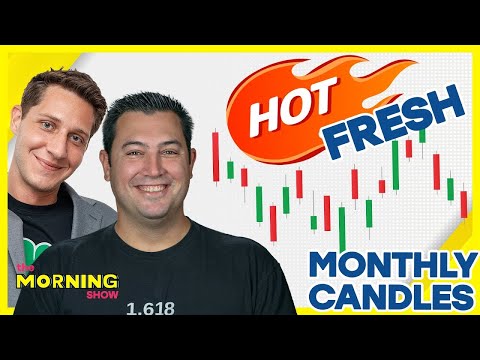
Energy stocks had held up even as oil fell. Brown liked SLB and Baker Hughes better than the integrated producers, while Ian Culley wanted crude to prove it could stay above $83.50.

Gold futures had spent five months above $1,923.70. On August 23, 2023, Ian Culley showed Spencer Israel where the mining stocks had already lost support.

A mystery chart put the August 18, 2023 bond debate to a test. Turned upside down, the Treasury fund looked like a breakout candidate. Turned the right way up, it was the fund Parets wanted to buy.

On August 4, 2023, Steve Strazza saw a possible Apple entry where JC Parets saw danger. Amazon’s double-digit sales growth brought its shares back to another price with a history.

Bitcoin was trading near $30,000 in July 2023. Demirors and JC Parets shared a question about the proposed funds: who still wanted to buy but lacked a way in?

After the grain deal ended in July 2023, Setzer looked at which wheat contract led the rally and what buyers were actually paying for grain.

On July 14, 2023, Parets had to decide what to do with two sets of January calls. Phil Pearlman explained why investors’ attitudes could take longer to turn than prices.

Spencer Israel tried the new app and found his personal and professional contacts mixing. Parets had already made his money on Meta’s recovery. A move below $290 would get him interested again, this time on the other side.

The miners had closed June above $30. Culley could name the price that would make him give up on that entry. What he couldn't say was when gold would clear its old high. JC Parets preferred to wait.
On June 30, 2023, a weather rally in grain futures had already given back much of its gain. Netto explained why that left him more interested in trading the noon release than if prices had kept running.

Polkadot might have been forming a bottom. Shiba Inu still looked weak. On June 23, 2023, Parets explained why his other crypto positions were in mining-stock options.
New Zealand had moved first. In June 2023, the Australian and Canadian dollars gave Culley two more charts to check before calling a breakdown in the U.S. Dollar Index.

The coffee note was how Spencer Israel followed coffee prices. Ian Culley had a different experience with the livestock note: cattle futures kept climbing while he waited for COW to clear $40.

The S&P 500 made its 2022 closing low in October. On June 16, 2023, Parets and Zarling compared the earlier turn in individual stocks with the difficulty of actually holding them.

The S&P 500 had rallied 20% from its low. On June 9, 2023, Lundgren explained the breadth signal he wanted before he would remove his last hedges.

Trading the correction made sense to Culley. Perz still saw a longer uptrend. Their June 2, 2023 discussion also laid out the prices Culley wanted in gold and Cameco.

Jay Woods wanted to see how Micron handled a regulatory setback. By the time he finished describing the setup, Kimmy Sokoloff had already bought and sold the stock.

On May 19, 2023, Bitcoin was lagging a breakout in technology stocks. Brian Lund saw a possible retreat toward the March lows. JC Parets expected buyers to clear $31,000 first.